


CQ
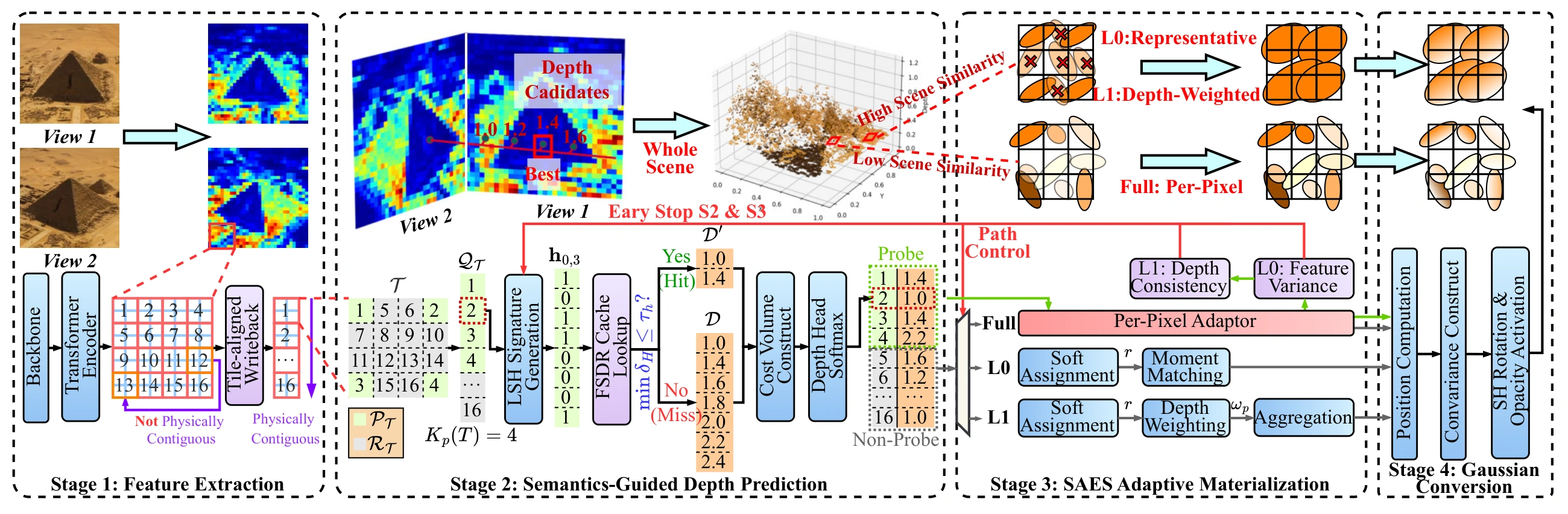
Query Q · 16-bit LSH
Hamming distance ≤ threshold
Cached C · 16-bit LSH
Cached depth anchor dc
Depth candidates · same global set
BaselineD
Cache hitD/R
A miss retains all D candidates.
Cross-view sampling → cost volume → U-Net → depth
4 × 4 TILE · CORNER PROBESOriginal S2 depth + Gaussian adaptor
L0Low feature varianceRepresentative
L1Else, low depth spreadDepth-weighted
FullElse, irregular tilePer-pixel adaptor
Only non-probe pixels follow the selected path.
Abstract
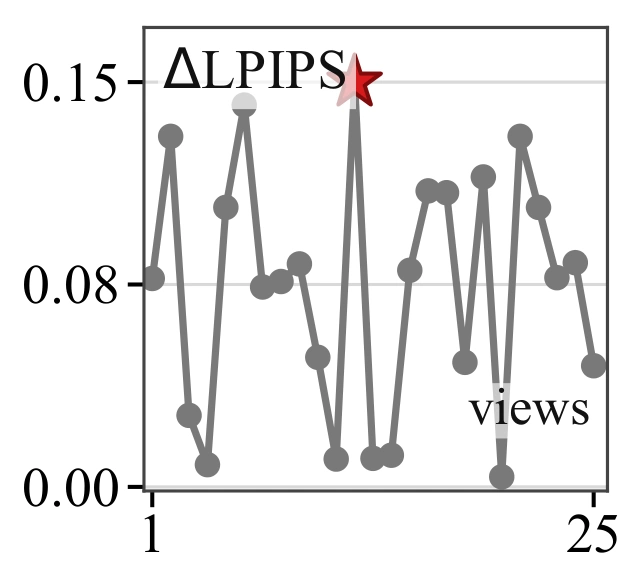
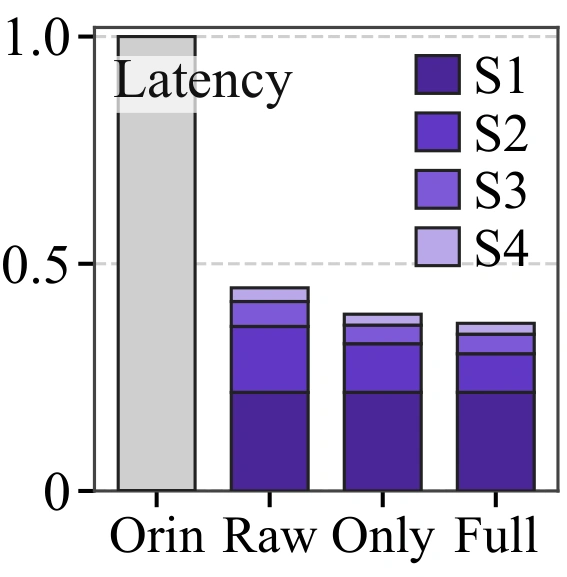
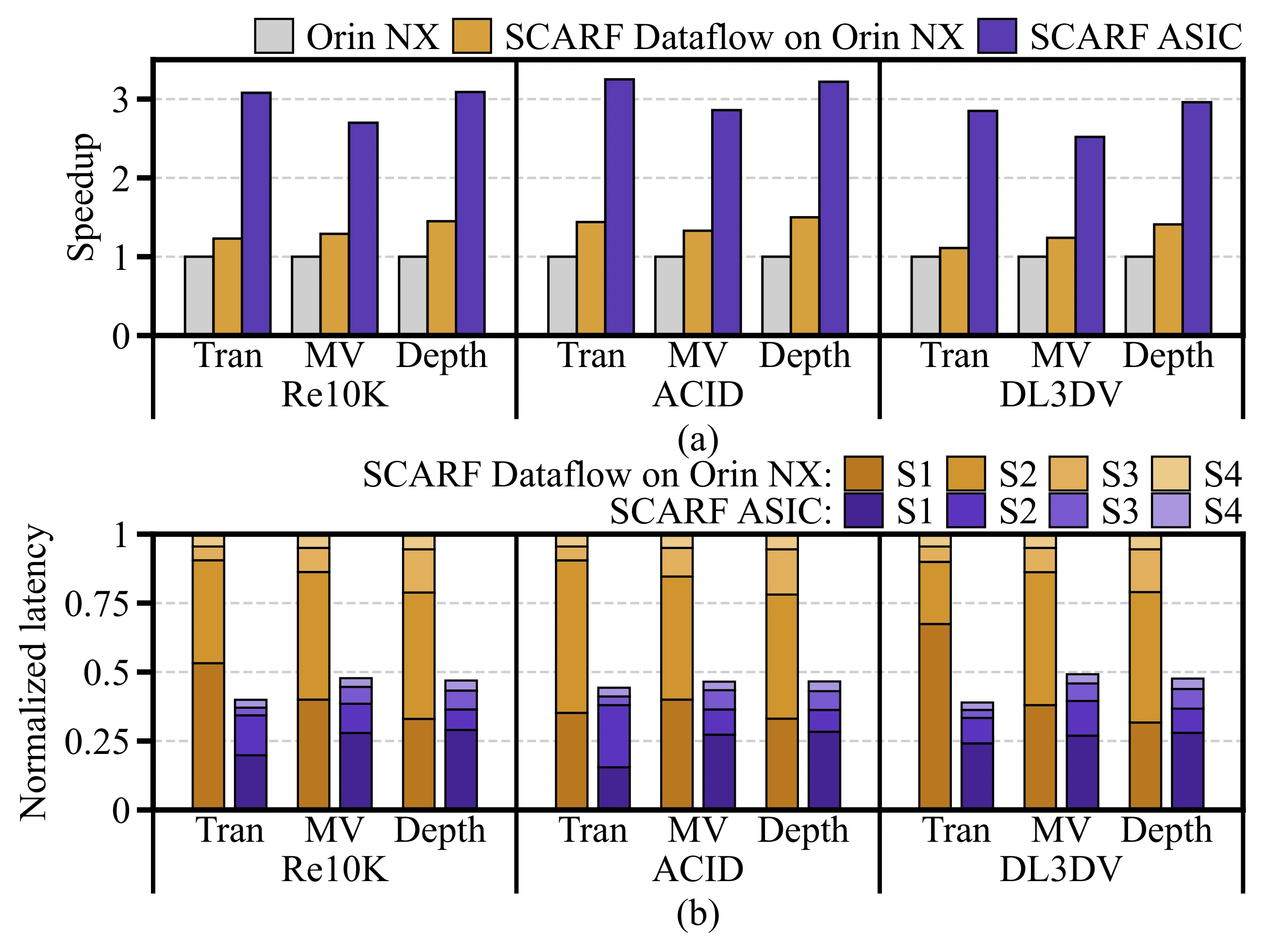
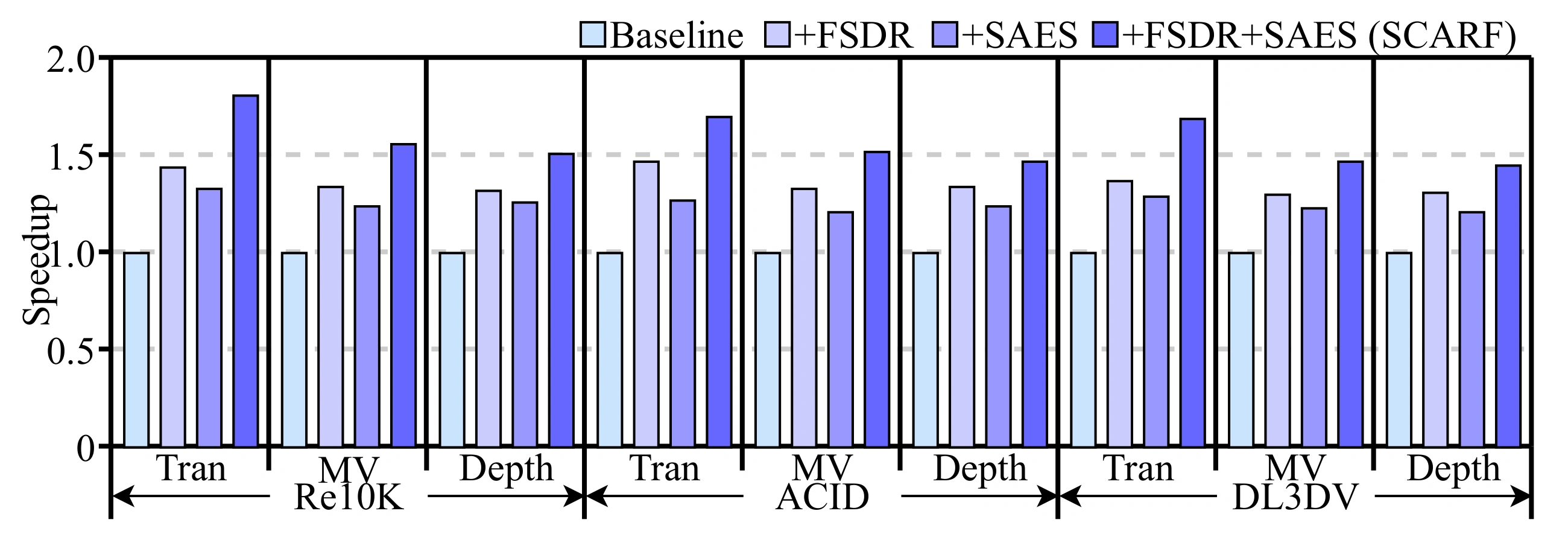
Depth-guided G-3DGS encoders reconstruct scenes directly from multi-view images without per-scene optimization. SCARF addresses two sources of redundant encoder work: FSDR reuses depth information across semantically similar features, while SAES selects a Gaussian generation path from local scene regularity before unnecessary primitives are created. A fused accelerator implements both mechanisms and delivers a 2.94-fold geometric-mean end-to-end speedup on the evaluated workloads, with maximum PSNR degradation below 0.072 percent.
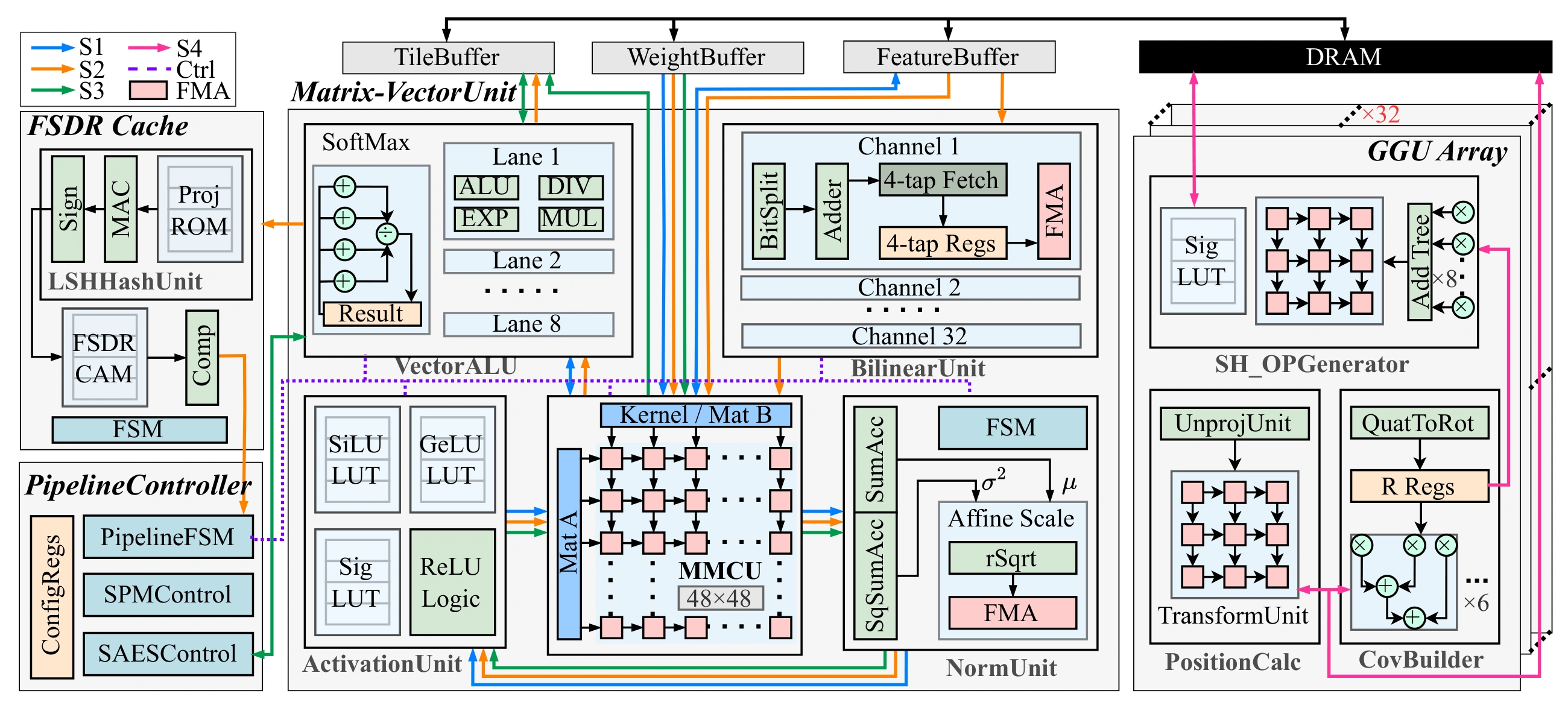
Dataflow and Architecture
FSDR: Feature Similarity Depth Reuse

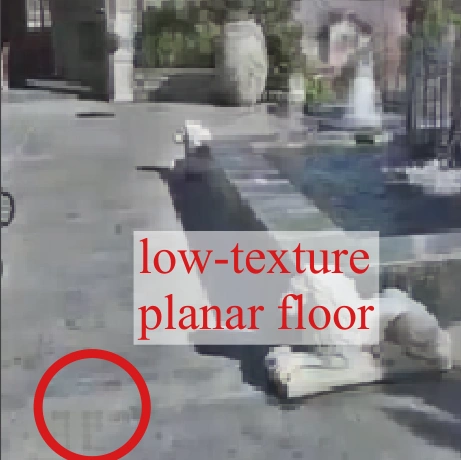
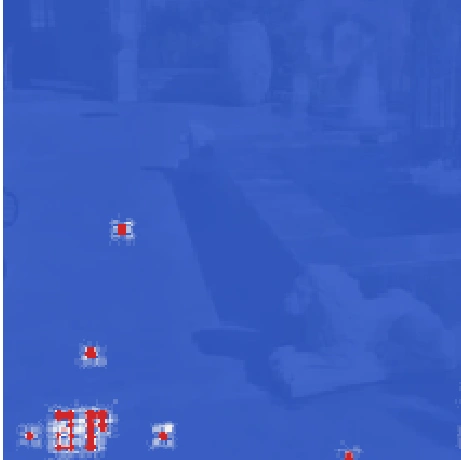
SAES: Scene-Adaptive Early Sparsification

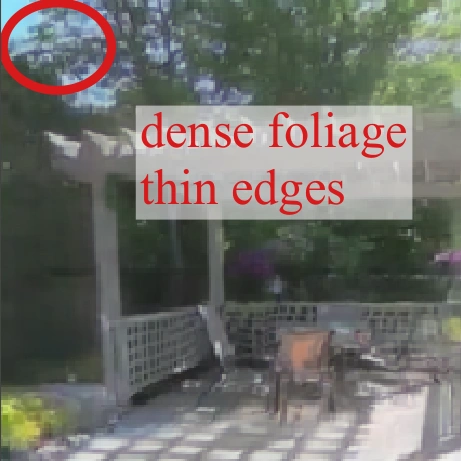
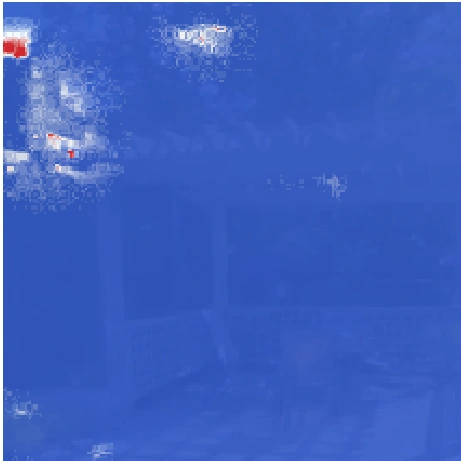
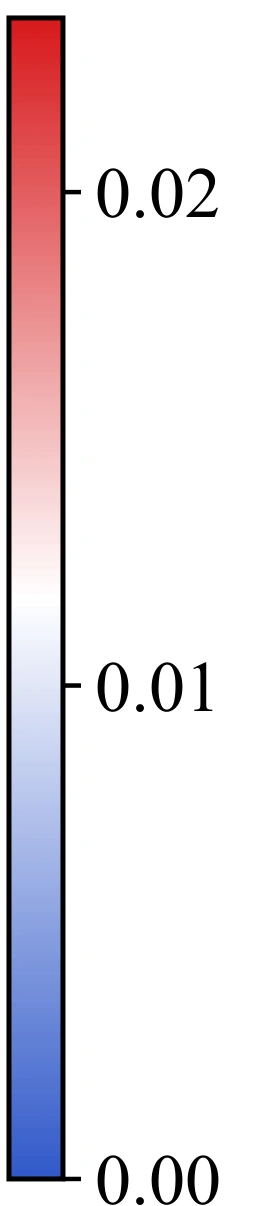
Qualitative Visualization
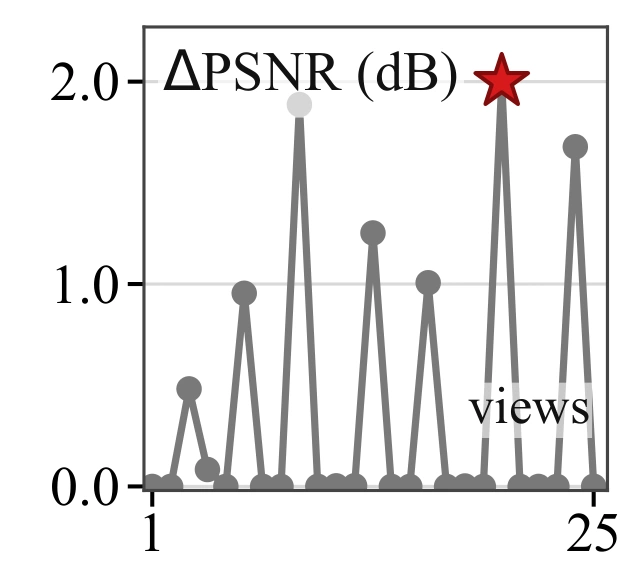
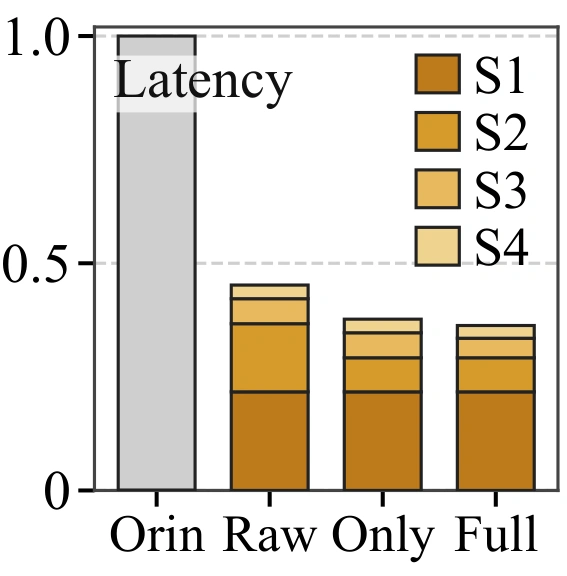
Quantitative Comparison
Faster end to end.
Both ideas contribute.
Presentation
 XIAOHONGSHU ↗
BibTeX
@inproceedings{ma2026scarf,
  author    = {Zirui Ma and Zhihua Fan and Haibin Wu and Wenxing Li and
               Fulin Zhang and Dongrui Fan and Xiaochun Ye and Wenming Li},
  title     = {{SCARF}: A Scene-Adaptive Depth-Guided {G-3DGS}
               Encoder Accelerator with Semantic Reuse and Fused Dataflow},
  booktitle = {2026 59th IEEE/ACM International Symposium
               on Microarchitecture (MICRO)},
  year      = {2026},
  pages     = {2512--2528},
  publisher = {IEEE},
  doi       = {10.1109/MICRO67795.2026.00172},
  url       = {https://doi.org/10.1109/MICRO67795.2026.00172}
}